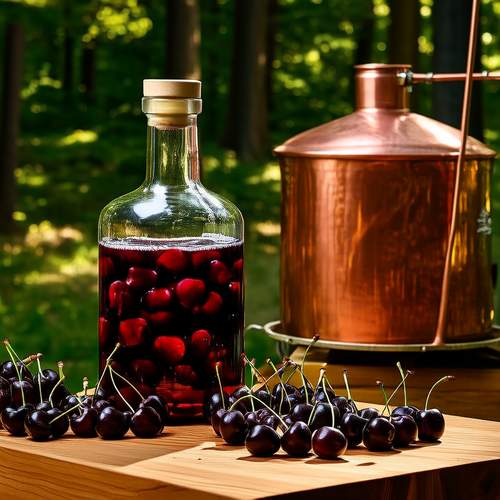
The art of crafting spirits from regional ingredients has long been a cherished tradition in Germany's Black Forest region. Among the most prized infusions is the Schwarzwalder Kirsch, or Black Forest cherry spirit, whose distinctive character owes much to the delicate balance of ethanol extraction. The duration of maceration – that critical period when cherries steep in alcohol – remains both a science and an heirloom secret among distillers.
Walking through the orchards near Baden-Baden in early summer, one understands why these tart Morello cherries command such respect. Their ruby-dark skins conceal an aromatic complexity that ethanol gradually coaxes out over weeks and months. Local producers guard their maceration timelines like sommeliers protect their cellar books, knowing that a difference of twenty days can tilt the flavor profile from bright fruitiness to deep, almond-like marzipan notes.
Historical records from the 19th century reveal that Black Forest farmers originally soaked cherries for pragmatic reasons – to preserve the harvest through harsh winters. What began as subsistence alchemy evolved into refined craftsmanship. Today's master distillers speak of ethanol as a "time-traveling solvent," its duration of contact with the fruit determining how far back through the cherry's life cycle the flavors will reach. Brief maceration captures the fresh, floral top notes; extended immersion dredges up the deeper, woody tones from the fruit's pit and stem.
The chemistry behind this process fascinates food scientists. During the first forty days, ethanol primarily extracts water-soluble compounds: fruity esters, bright acids, and those volatile aromatics that make freshly crushed cherries so intoxicating. After this initial phase, the alcohol begins dissolving oil-based components from the pits – where the famous benzaldehyde forms, carrying that distinctive almond essence. Distillers must decide precisely when to halt this extraction, as overlong soaking can lead to unbalanced, overly medicinal flavors.
Climate change has introduced new variables into this ancient equation. Warmer springs now accelerate cherry ripening by nearly two weeks compared to thirty years ago, altering the fruits' sugar-acid balance before they ever meet the ethanol. Some producers have adjusted maceration times accordingly, while others stubbornly adhere to ancestral calendars. The debate grows particularly heated around the full moon maceration method – a folk tradition claiming lunar cycles affect extraction rates, now gaining unexpected support from studies on ethanol's capillary action under different atmospheric pressures.
Modern technology allows precise monitoring of extraction curves, yet many Black Forest distillers still rely on sensory checks passed down through generations. They'll remove a few milliliters of the steeping liquid at various intervals, observing how the viscosity coats the glass or how the aroma evolves after exposure to air. This tactile approach creates noticeable batch variations that enthusiasts celebrate as "vintage differences," much like fine wines. The current trend toward extended maceration (some lasting over eighteen months) reflects consumer demand for more complex, sippable spirits rather than cocktail ingredients.
Tourists visiting the region often mistake the cherry pits' role – these aren't mere byproducts but active participants in flavor development. When properly crushed (never ground), their gradual release of amygdalin creates that signature bitter-sweet balance. Some experimental distillers now employ sequential maceration, separating flesh and pits to control their extraction timelines independently, then blending the results. This innovation would have shocked traditionalists, though even they admit the technique produces remarkably layered spirits.
As global interest in craft spirits grows, the Black Forest's cherry maceration practices face both opportunities and threats. Large commercial producers pressure small operations to standardize times for efficiency, while purists argue that abandoning seasonal adaptation would destroy the spirit's soul. Meanwhile, researchers at Freiburg University investigate how different ethanol proofs (ranging from 60% to 75%) interact with varying maceration durations, potentially creating an entire new taxonomy of cherry spirit profiles. What remains unchanged is the quiet patience of those oak barrels in dim cellars, where time and alcohol perform their slow alchemy on nature's bounty.

By /May 26, 2025
By /May 26, 2025
By /May 26, 2025
By /May 26, 2025

By /May 26, 2025
By /May 26, 2025
By /May 26, 2025

By /May 26, 2025

By /May 26, 2025
By /May 26, 2025
By /May 26, 2025
By /May 26, 2025
By /May 26, 2025
By /May 26, 2025
By /May 26, 2025

By /May 26, 2025
By /May 26, 2025
By /May 26, 2025

By /May 26, 2025

By /May 26, 2025